When: August 15th, 2026 |
|---|
| Duration: Full day tour with flexible 2-hour window at each stop |
| Tour Hours: 9:00 AM -4:00 PM |
| Total Driving Distance: 45-50 miles |
| Number of Stops: 6 |
As America celebrates its 250th anniversary in 2026, Virginia commemorates the 250th anniversary of the Virginia Declaration of Rights (1776) and 240th anniversary of the Virginia Statute for Religious Freedom (1786). The Voices of Freedom Tour celebrates the courage of those who demanded liberty when dissent was still illegal.
These sites witnessed the transformation from a colony where missing church meant jail time to a commonwealth that pioneered religious freedom for the world. Join us in honoring the voices that still echo through these historic places – voices that remind us that freedom is never given, only claimed.
Printable Map
Key Terms
● Parish: In colonial Virginia, both a religious district and unit of local government
● Glebe: Church-owned farmland that provided income for clergy
● Dissenters: Non-Anglican Christians who faced fines and imprisonment
● Establishment: Official government support of one church through taxes
● Disestablishment: Ending government support of religion (1786 in Virginia)
● Vestry: Parish governing board that levied taxes and managed civil affairs
● Parson’s Cause (1763): Legal case where young lawyer Patrick Henry challenged
Anglican clergy’s right to full tax-funded salaries, marking the beginning of resistance to
religious establishment.
From Establishment to Freedom
When English colonists arrived at Jamestown in 1607, they brought the Church of England with them. By 1619, the Anglican Church became the official church of the Virginia colony – not just a religious institution, but an arm of local government. The church maintained property records, built and maintained roads, levied taxes, and cared for the poor and orphans. Colonists were required by law to attend services or face fines and even imprisonment.
St. Paul’s Parish was created in 1703 from the eastern part of St. Peter’s Parish in New Kent. When Hanover County was formed in 1720, its boundaries matched those of St. Paul’s Parish exactly – church and state were literally one. St. Martin’s Parish was later carved from the western portion of St. Paul’s in 1727. This system of parishes functioned as both religious and civil administration for over 160 years until the Revolutionary era brought dramatic change.
The transformation came in stages: In 1785, the Episcopal Diocese of Virginia was organized. In 1786, Jefferson’s Virginia Statute for Religious Freedom was adopted, officially ending state-established religion. By 1789, the Protestant Episcopal Church was formed as an independent American church. The old parish churches and their glebes (church-owned lands that generated income for clergy) were sold off, and many buildings served multiple denominations or fell into disuse.
Historical Timeline
● 1607 – Church of England arrives with Jamestown colonists
● 1619 – Anglican Church becomes official church of Virginia
● 1703 – St. Paul’s Parish created from St. Peter’s Parish
● 1720 – Hanover County created with St. Paul’s Parish boundaries
● 1727 – St. Martin’s Parish created from western St. Paul’s Parish
● 1729 – Slash Church (Upper Church) built
● 1735-39 – Fork Church built in St. Martin’s Parish
● 1743 – Polegreen Church established (first non-Anglican)
● 1747 – Samuel Davies arrives as first licensed dissenting minister
● 1763 – Patrick Henry argues the “Parson’s Cause”
● 1785 – Episcopal Diocese of Virginia organized
● 1786 – Virginia Statute for Religious Freedom adopted
● 1789 – Protestant Episcopal Church formed
● 1842 – Slash Church becomes Disciples of Christ
● 1845 – St. Paul’s Episcopal built at Hanover Courthouse
● 1853 – Duncan Memorial Methodist congregation founded
● 1870 – Brown Grove Baptist Church founded
From Parish to Pluralism: The journey from Anglican government control to religious diversity.
The Price of Dissent: How colonial dissenters risked fines and imprisonment for their beliefs.
1786 – The Turning Point: Virginia Statute for Religious Freedom changed everything.
Freedom’s Living Legacy: How these sites embody the ongoing American experiment.
● How the Anglican parish system functioned as local government in colonial Virginia
● The revolutionary transformation from state church to religious freedom (1786-1789)
● Virginia as the laboratory for the First Amendment
● The diversity of responses to disestablishment: some churches closed, others thrived
● How conscience rights became constitutional rights through lived experience
● Why preserving these freedom sites matters for understanding American democracy
Stop One: Slash Church
Address: 11353 Mt. Hermon Road, Ashland, VA 23005
Time Window: 9:00-11:00 AM
Driving Time to Next Stop: 12 minutes (7 miles)
● Built 1729 as the “Upper Church” of St. Paul’s Parish (a “Lower Church” existed near
Old Church)
● Virginia’s oldest wooden structure still in use
● Symbol of the Anglican establishment that controlled colonial life
● After disestablishment in 1786, served multiple denominations before becoming
Disciples of Christ (1842)
● The Anglican congregation that once worshipped here later built St. Paul’s Episcopal
(1845) at Hanover Courthouse
Featured Voice of Freedom: Patrick Henry and the Reverend Patrick Henry
The young rebel who challenged authority in the Parsons’ Cause case, setting the stage for his famous “Give me liberty or give me death!” speech. His journey from this church to revolutionary leader shows how questioning authority became an American tradition. His uncle, the Reverend Patrick Henry served as rector of this very parish for 40 years.
Stop Two: Historic Polegreen Church
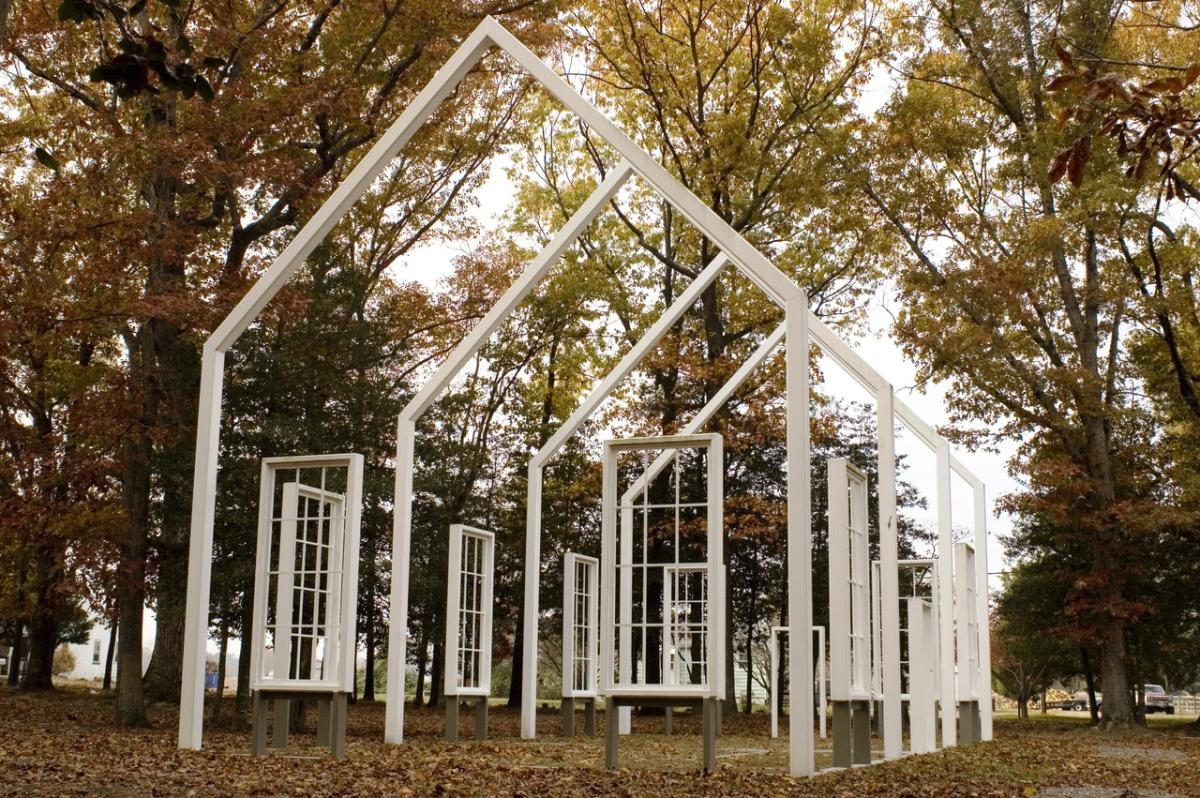
Address: 6411 Heatherwood Drive, Mechanicsville, VA 23116
Time Window: 10:00 AM-12:00 PM
Driving Time to Next Stop: 15 minutes (8 miles)
● First legal non-Anglican church in Virginia (1743) – breaking the parish monopoly
● Required special license from colonial government despite laws requiring Anglican
attendance
● Where the Great Awakening (1740-1776) sparked democratic ideals and challenged
established authority
● Samuel Davies’ literacy programs for enslaved Africans challenged both religious and
social order
● Destroyed in Civil War (1864), rebuilt as monument to freedom of conscience
Featured Voice of Freedom: Samuel Davies
Princeton president and Virginia’s first licensed dissenting minister (1747-1759). Successfully argued for religious toleration under English law while the parish system still demanded conformity. His powerful oratory inspired young Patrick Henry and his pioneering literacy programs for enslaved Africans proved that freedom of thought leads to freedom of action.
Stop 3: Brown Grove Baptist Church
Address: 9328 Ashcake Road, Ashland, VA 23005
Time Window: 11:00 AM-1:00 PM
Driving Time to Next Stop: 10 minutes (6 miles)
● Founded 1870, after both disestablishment and emancipation
● Represents the next chapter: from legal freedom to actual independence
● Where formerly enslaved people created their own institutions beyond any parish control
● National Historic Landmark recognizing 150+ years of self-determination
● Living testament that freedom requires both law and opportunity
● Because the historic African American church has no one single location, Brown Grove represents the collective Black church experience of Hanover County.
● Union Baptist church in Beaverdam (est. 1835) is the oldest Black Church in Hanover County.
Featured Voice of Freedom: John Jasper
John Jasper was an antebellum and Reconstruction preacher. He experienced a religious conversion in 1839 and learned to read and write from a fellow enslaved person allowing personal interpretation of the Bible. The Sixth Mount Zion Baptist Church, founded by Jasper in 1867, remains active in Richmond.
Stop 4: Old Chapel at Randolph-Macon College
Address: 201 Henry Street, Ashland, VA 23005
Time Window: 12:00-2:00 PM
Driving Time to Next Stop: 12 minutes (9 miles)
Methodism began as reform movement within Anglican Church before independence
● Congregation founded 1853, after disestablishment created space for new denominations
● Home to America’s oldest Methodist college in continuous operation (Randolph-Macon,
1830)
● Symbol of how religious freedom fostered educational innovation
● Shows evolution from state church to voluntary denominations
Featured Voice of Freedom: George Mason
Author of the Virginia Declaration of Rights (1776), which declared “all men are equally free and independent.” His Article 16 on religious liberty directly influenced both Jefferson’s Statute and Madison’s First Amendment. Mason insisted that religious freedom was a natural right, not a privilege granted by the government.
Stop 5: Patrick Henry’s Scotchtown
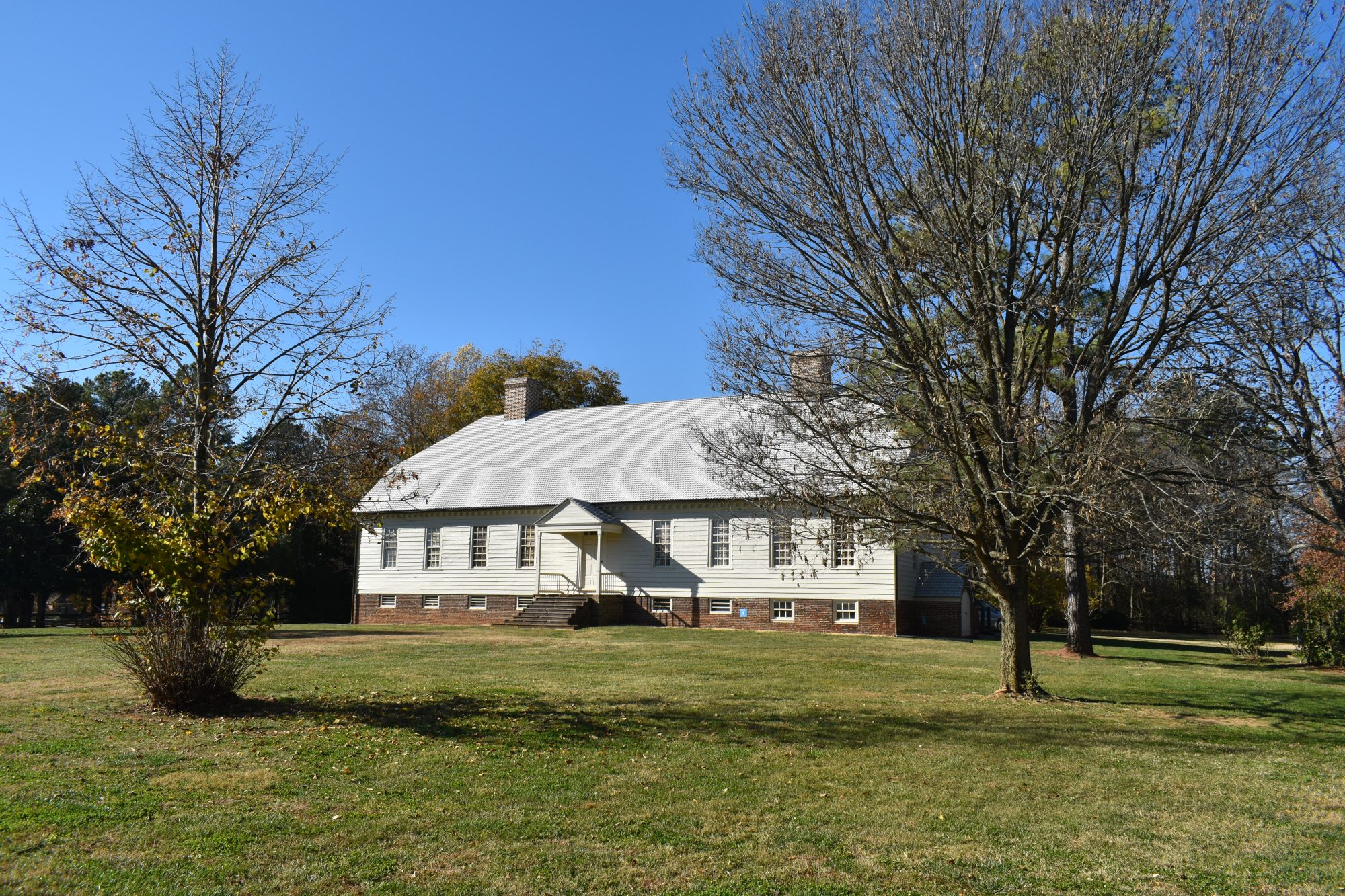
Address: 16120 Chiswell Lane, Beaverdam, VA 23015
Time Window: 1:00-3:00 PM
Driving Time to Next Stop: 8 minutes (5 miles)
● Patrick Henry’s home during his most revolutionary years (1771-1778)
● Near Cedar Creek Meeting House – Quakers who quietly defied the parish system since
1721
● Where Quakers first condemned slavery in Virginia (1767) while parishes upheld the
system
● By 1779, freed approximately 200 enslaved people – radical action in a parish-controlled
society
● Birthplace of ideas that became the First Amendment
Featured Voice of Freedom: Dolley Madison
Born Dolley Payne, Madison was the scion of two prominent Virginia families. Raised in a strict Quaker household, the Payne family pacifistically remained removed from the American Revolution. She witnessed her father manumit his enslaved people in 1783 but became a slaveowner herself in 1794 through her second husband, James Madison. She joined the Episcopal faith in 1845.
Stop 6: The Fork Church
Address: State Route 738 (Old Ridge Road), Doswell, VA 23047
Time Window: 2:00-4:00 PM
Return Drive: 20 minutes to starting point (13 miles)
● Colonial brick structure that witnessed the complete transformation of American religious
life
● Unlike Slash Church, Fork remained Episcopal after disestablishment
● Symbol of peaceful transition from state church to voluntary congregation
Featured Voice of Freedom: Thomas Jefferson
His Virginia Statute for Religious Freedom (1786) declared “Almighty God hath created the mind free.” This revolutionary law ended the parish system, terminated mandatory church taxes, and became the model for the First Amendment’s guarantee of liberty of conscience. It dismantled nearly 180 years of religious establishment in Virginia.